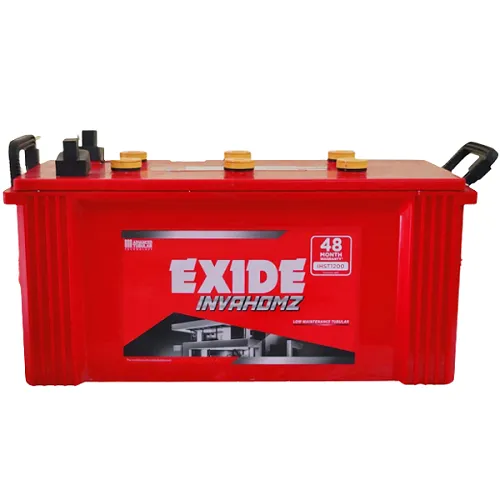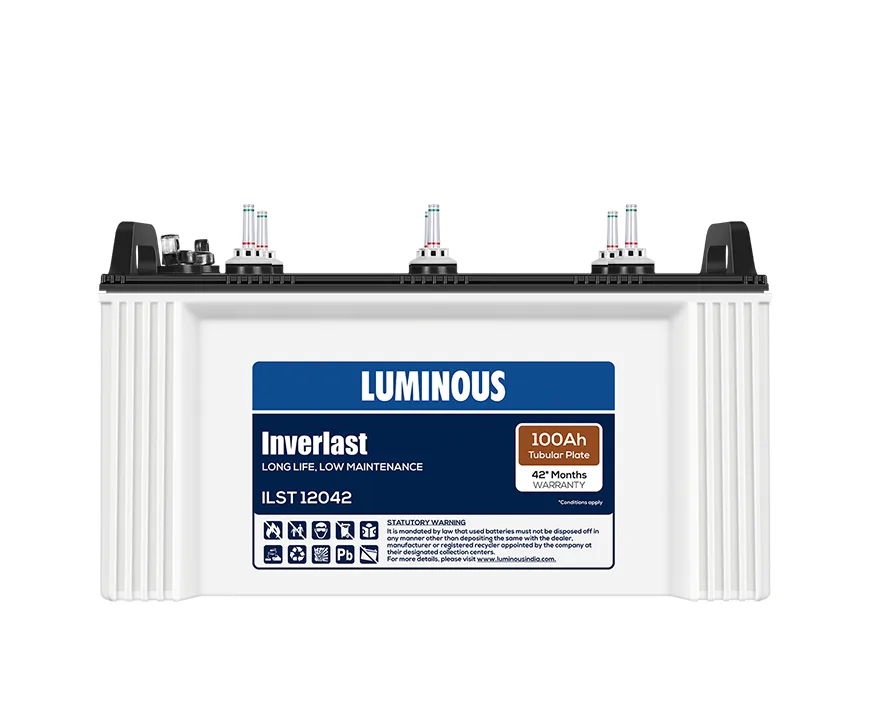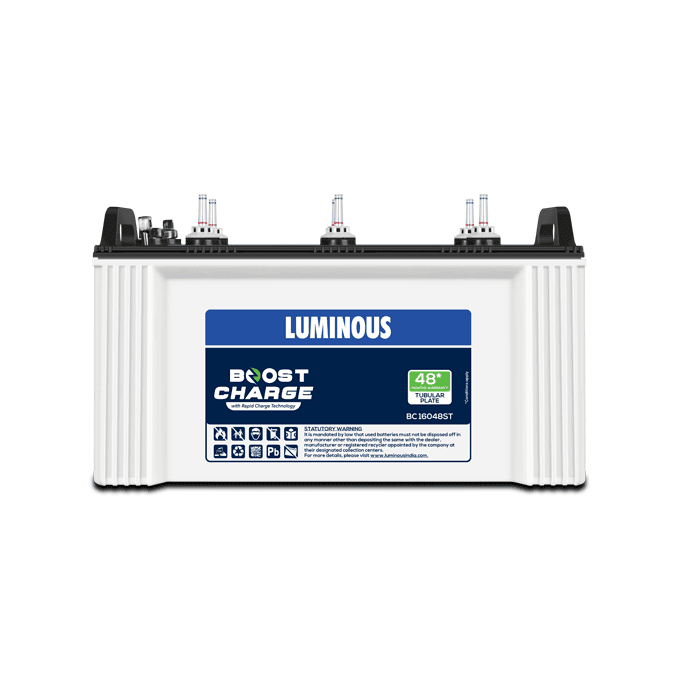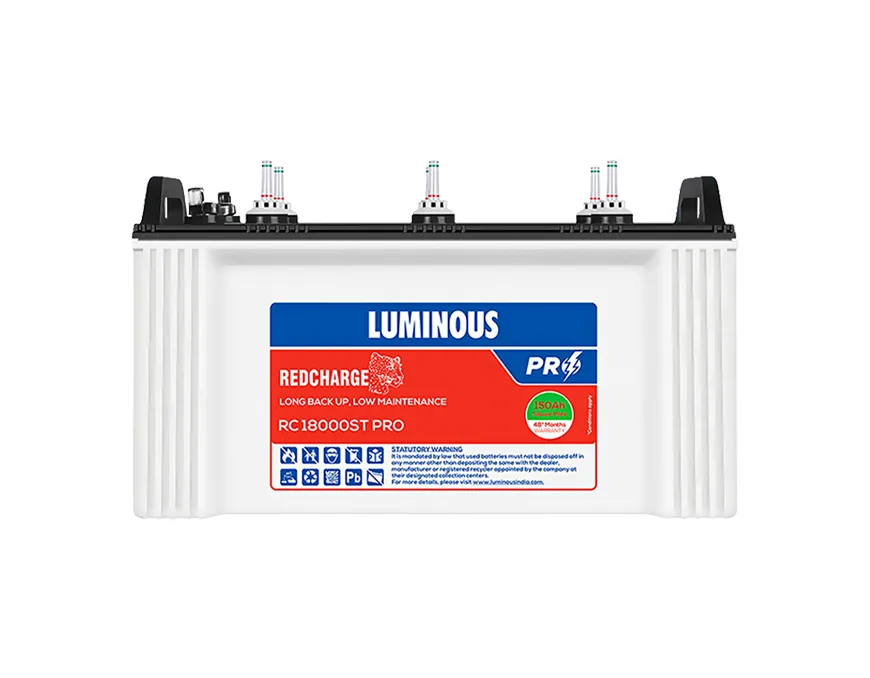
A tubular inverter battery is the most expensive single item in a home backup system, and also the one that gets the least attention. It sits in a corner, does nothing for months, and then has to carry the house through a four-hour cut. When it fails after two and a half years instead of five, the usual assumption is that it was a bad battery. In our experience the cause is much more often one of a short list of habits: low water, loose or corroded terminals, repeated deep discharge without a full recharge, or an inverter set up for the wrong type of battery.
This guide is for owners of flooded tubular batteries, the type with removable caps and a water level you can see. It explains what to do and, just as important, why. If you own a sealed maintenance-free battery you do not top up water, and our guide to SMF, tubular and flat plate batteries explains the difference.
Know what is inside before you open the caps
A flooded lead-acid battery contains plates immersed in a mixture of sulphuric acid and water. When the battery charges, some of the water is split into hydrogen and oxygen gas and escapes through the vents. When it is hot or being overcharged, more water is lost this way. The acid itself does not evaporate; only the water leaves. That one fact drives the rules for topping up: you replace the water that has gone and you never add acid. Adding acid to a battery makes the electrolyte too strong, which attacks the plates and shortens life.
The plates must stay covered. A plate that is exposed to air is no longer working, and the exposed part sulfates and dries out in a way that cannot be reversed. This is the most common avoidable cause of early failure in flooded batteries.
Topping up water the right way
- Use distilled or battery-grade water only. It is sold at battery shops and petrol pumps for a few rupees. Tap water carries minerals that coat the plates and increase self-discharge. Water from a household RO purifier is not the same as distilled water, and it is not a substitute.
- Check the level in good light, with the inverter switched off. Most batteries have a minimum and a maximum mark on the case. Some have a level indicator inside each cell. The electrolyte should sit between the two marks, or just above the top of the plates if no marks are shown.
- Top up after the battery has been charged, not before. The electrolyte level rises when a battery is charging and falls as it rests, so a level set on a flat battery will overflow when you charge it. The one exception is when the plates are visibly exposed. In that case add just enough water to cover them, charge fully, and then adjust the level.
- Do not overfill. Fill to the maximum mark and no further. Overfilled cells spill acid over the top and the case, which causes corrosion and a conductive film between terminals.
- Use a clean funnel or a battery filler. Do not pour straight from a bottle; it is easy to overfill, and dirt that falls in becomes permanent.
- Close every cap firmly and wipe away any spilt water or acid with a damp cloth.
How often? The 45-day figure is a sensible interval in a cool room, and many manuals give something similar. During the Delhi summer, with higher temperatures and heavier use, check every month. In winter, the interval can stretch. Write the date of each top-up on the battery with a marker or in your phone. The pattern teaches you something: if a battery needs a lot of water often, the charging voltage may be set too high, the battery may be overheating, or it may be reaching the end of its life.
Terminals and cables: small resistance, big losses
The cables between an inverter and its battery carry large currents. Where a cable clamp meets a battery terminal, even a thin layer of corrosion or a slightly loose nut creates resistance, and resistance turns current into heat. The visible result is a white, blue or green crust on the terminal. The hidden result is a battery that charges poorly, an inverter that shuts down early on overload, and in the worst case a melted terminal clamp.
To clean terminals safely:
- Switch off the inverter and unplug it from the mains before you touch any cable.
- Disconnect the negative cable first and the positive second; reconnect in the opposite order. Never let a spanner touch both terminals at once.
- Brush off dry crust with a stiff wire brush. For stubborn deposits, a paste of baking soda and water neutralises the acid; rinse lightly with a little clean water and wipe fully dry. Keep the paste out of the cells.
- Refit the clamps and tighten them well, so you cannot twist them by hand.
- Only then smear a thin layer of petroleum jelly or terminal grease over the connection. Applying it before tightening can trap grease between the surfaces and increase resistance.
When two or more batteries are wired together, use connecting cables of equal length and thickness, and check that every connection is tight. An uneven cable layout makes one battery work harder than the others.
What actually kills a tubular battery
1. Chronic undercharging
This is the biggest one. If the battery is discharged during a power cut and the mains does not stay on long enough to refill it before the next cut, it never reaches full charge. Lead sulfate on the plates hardens into crystals that the charger cannot easily convert back. Capacity falls bit by bit, and backup time shrinks. Long summer cuts and weak mains make this worse. If your battery is routinely left half empty, the answer may be a larger battery, a more powerful charger, or reducing the load on backup.
2. Low electrolyte
As explained above, exposed plates are permanently damaged. A battery that has run low on water more than once will not recover its original capacity even after refilling.
3. Overloading the inverter
Running more load than the inverter and battery are sized for drains the battery faster and more deeply, heats the cables and clamps, and wears the battery out sooner. Adding an air conditioner, a geyser or a heavy pump to a setup designed for fans and lights is the typical example. Check the rated capacity of both inverter and battery before adding appliances. Our combo guide shows how to work out what a given setup can carry.
4. The wrong battery type setting on the inverter
Many inverters have a switch or menu setting for the type of battery connected, commonly with choices for flat plate, tubular and sealed batteries. Different types want different charging voltages. A tubular battery charged on a flat plate setting may never fully charge. A sealed battery charged on a tubular setting may be overcharged and lose water it cannot get back. When you replace a battery with a different type, check this setting.
5. Heat and poor ventilation
As covered in our article on why batteries fail early in Delhi, high temperature accelerates every ageing process. A battery in a closed cupboard or direct sun runs hot, loses water faster and corrodes faster. Charging also releases hydrogen, which is flammable. Keep the battery in a ventilated place, away from sparks, flames and anything that arcs, and do not smoke near it.
6. Mixing old and new batteries
If you run two batteries in a bank and one fails, replacing only the failed one is tempting. It usually backfires. The old battery has lower capacity and higher internal resistance, and the new one ends up carrying more of the load while being charged to the wrong level for the old one. Both age unevenly. Where possible, replace the batteries in a bank together, and keep them the same model and the same age.
7. Leaving it discharged or unused
A battery left flat for days sulfates quickly. If the house is going to be empty for a few weeks, leave the mains and the inverter on so that the charger keeps the battery topped up, rather than switching everything off. A battery that sits idle and discharged for weeks often comes back with permanently reduced capacity.
Simple monthly routine
- Look at the water level in each cell; top up if it has fallen below the maximum mark.
- Check the terminals and clamps for crust, heat discolouration or looseness.
- Wipe the top of the battery with a dry or slightly damp cloth.
- Check that the inverter's battery type setting still matches the battery you have.
- Notice how long the backup lasts compared with when it was new. A clear drop is the earliest sign that the battery is ageing.
If you can, have a technician measure the specific gravity of the electrolyte in each cell once a year. A cell that reads noticeably lower than the rest has a problem, and catching it early can decide whether you service the battery or replace it. The reading for a healthy cell depends on the model, so use the figure in the manufacturer's manual and not a figure from the internet.
How long should a tubular battery last?
Well-maintained tubular batteries are often quoted at around four to five years of service. In hot, long-cut conditions the result can be shorter, and with the habits above it can be at the upper end. If your battery is past that age and backup time has visibly fallen, a replacement will usually cost less than the electricity, inconvenience and repeated servicing of keeping it alive. Look at the full range of inverter batteries, which includes brands like Exide and Luminous. If the inverter is also old, inverter and battery combos let you replace both as a matched pair, and inverters are available on their own. Your old battery has resale value, so ask about exchange when you buy.