Car batteries rarely die without warning, but the warnings are easy to explain away. The engine is a little lazy this morning, the headlights look yellow, the stereo reset itself. Most people only act when the car will not start at all, which is usually at the least convenient moment. This guide covers the signs that tell you a replacement is due, how to check the age of your battery properly, how to do a simple voltage check at home, and how to tell a battery problem from a charging problem so you do not buy a battery you did not need.
If you want a shorter list with replacement costs and doorstep service details, our car battery replacement guide covers that. This article goes deeper on the diagnosis.
Sign 1: The engine cranks slowly
This is the earliest and most reliable sign. A healthy battery spins the engine over briskly and the engine catches within a second or two. A weakening battery turns the engine over in a labouring way, a slow "rrr-rrr-rrr" that sounds as if the car is waking up reluctantly. It is often worse on the first start of the day, and worse again when the weather is cold or after the car has sat for a few days.
If the starter makes only a fast clicking sound, or a single click, the battery usually has too little charge to engage the starter at all. If the lights come on bright but the starter does nothing, the problem may be the starter, a loose connection or a poor ground rather than the battery.
Sign 2: Headlights and interior lights dim, especially while cranking
A battery that is nearly finished cannot hold its voltage under load. Watch the dashboard and headlights while someone else turns the key. If they dim sharply, the battery is dropping voltage under the strain of the starter. Lights that look weak with the engine idling, then brighten when you rev the engine, tell you the alternator is carrying the whole load because the battery is no longer helping to stabilise the system.
Electrical oddities belong here as well: central locking that responds slowly, power windows that crawl, a stereo that resets, an infotainment screen that reboots when you start. Modern cars are sensitive to low voltage, and these glitches often appear before the starting problem does.
Sign 3: The dashboard warning light
The battery-shaped warning light is one of the most misunderstood symbols in a car. It does not mean "the battery is old". It means the charging system is not delivering the voltage it should. The cause may be a worn alternator, a loose or slipping belt, a broken wire or a poor connection. A new battery fitted to a car with a faulty alternator will go flat quickly, and you will have spent money without solving anything. If the light stays on while you drive, have the charging system checked before or at the same time as the battery.
Some cars also show a separate battery or start-stop warning on the instrument cluster when the battery's condition is poor, and the start-stop function may stop working altogether. Cars with automatic start-stop depend heavily on a healthy battery and will often disable the feature as the battery weakens.
Sign 4: The physical clues
- A swollen or bulging case. Heat and overcharging can distort the case. A bulging battery is damaged inside and should be replaced, not nursed along.
- Heavy corrosion on the terminals. A little white crust can be cleaned away, but if it returns quickly or is accompanied by leaking, the battery or its seals are failing.
- A smell like rotten eggs. That sulphur smell means the battery is overheating or being overcharged and is venting gas. Stay clear, keep naked flames away, and have it checked straight away.
- Moisture or traces of acid around the case. A cracked case or a leaking seal cannot be repaired.
- Needing jump-starts. Once is an accident. Twice in a month is a battery or a charging problem that needs finding.
Sign 5: Age, and the Delhi rule of thumb
Age is the sign you can check before any symptom appears. In the heat of Delhi NCR a car battery commonly lasts around three to four years, although individual results depend on driving pattern, parking and quality. Once a battery reaches its third birthday, treat it as a battery that should be tested at every service, and once it passes four years, plan the replacement rather than waiting for the failure. Our guide to why batteries die faster in Delhi explains why the local conditions shave a year off the figures you see in brochures.
How to read the date code on a battery
You cannot judge age by the warranty card alone, because the card shows when the battery was sold and the battery may have sat on a shelf before that. A battery loses charge while it sits in storage, and one that has waited many months before sale has already used up part of its life. Look for a manufacturing date on the battery itself.
On most batteries there is a printed sticker or a stamped code on the top or on the side of the case. Formats differ between manufacturers, so there is no single rule that works for every brand, but a few patterns are common:
- Plain month and year. A code such as 09/26 or 0926 usually means September 2026.
- A letter for the month and a digit for the year. Some manufacturers use A for January through to L for December, followed by a digit for the year. Under such a scheme a code beginning with K6 would read as November 2026.
- A longer batch code. Some brands bury the date inside a longer batch number. In that case the dealer or the manufacturer's customer service can tell you what it means from the code and the model number.
If you cannot read it confidently, do not guess; ask. When buying a new battery it is reasonable to ask for one that was made recently, a few months before the sale rather than a year before. That request is normal and a reputable seller will check the code with you.
A simple voltage check at home
A basic multimeter set to DC volts gives a useful first impression. Do this with the engine off and ideally after the car has rested for a few hours, so that the surface charge from driving has gone.
- About 12.6 to 12.8 volts: the battery is fully charged.
- About 12.4 volts: roughly three-quarters charged.
- About 12.0 volts or below: effectively flat. If it will not hold more than this after a long drive or a proper charge, the battery is failing.
Then start the car and check again at the terminals with the engine running. A healthy charging system usually reads somewhere in the range of 13.8 to 14.5 volts. If the reading stays near the resting figure, the alternator is not charging, and you have a charging fault. If the voltage collapses to around 10 volts or lower during cranking, the battery cannot cope with the load.
A resting voltage reading is only a hint. A battery can show a healthy voltage and still fail a load test, because voltage tells you the state of charge and not the capacity that remains. A workshop or battery shop can run a load or conductance test in a few minutes, and many will do it without obligation.
Battery or alternator? A quick way to tell
If the car starts with a jump and then keeps running normally, but will not start again after a few hours or the next morning, the battery is not holding charge. If the car starts with a jump but stalls shortly after the cables are removed, the alternator is probably not producing power. Cars that are slow to start but run perfectly once going usually point to the battery. Cars that start well and then show electrical problems or the battery warning light while driving usually point to the charging system.
A less common cause is a parasitic drain, such as a faulty module, a badly fitted dashcam or an aftermarket stereo wired straight to the battery, which flattens a good battery overnight. If a new or healthy battery keeps going flat, ask a technician to check the current draw with the car switched off.
What to do when you decide to replace it
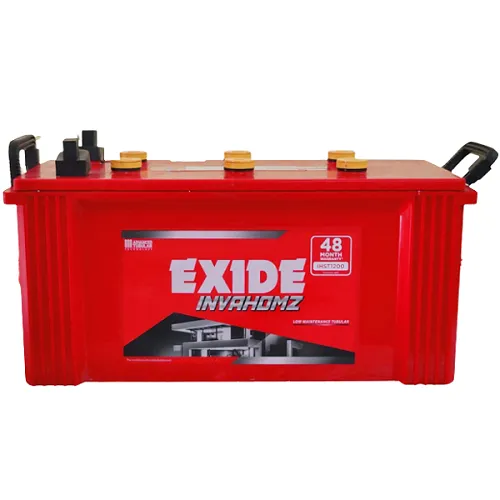
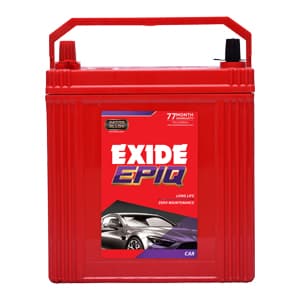
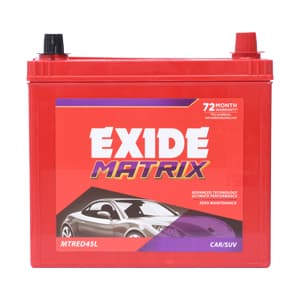
Match the capacity and the terminal layout to your car, and do not fit a noticeably smaller battery than the one the manufacturer specified. Batteries from established brands, such as Exide and Amaron, are available for almost every model, and you can see the full range under car batteries. Your old battery has scrap value, so ask about exchange. If you have a spare battery lying around from a previous car, our page on selling an old battery explains how that works.
Replacing a battery before it fails costs the same as replacing it afterwards, but it spares you the tow, the missed meeting and the rushed purchase. If your battery shows two or more of the signs above, or is past its fourth year, it is time to look.