Ask a battery dealer in Delhi how long a car or inverter battery lasts and you will hear a number that is a year or so shorter than the one printed in the brochure. That is not a sales trick and it is not usually a bad batch. A lead-acid battery is a chemical device, and chemistry is sensitive to temperature, to how often the battery is charged back to full, and to what it is sitting in. Delhi NCR is hard on all three at once.
This guide explains what actually happens inside a battery during a Delhi summer, why so many batteries fail in the first cold week of winter even though the damage was done months earlier, and which habits are worth changing. It covers both car batteries and home inverter batteries, because the causes overlap more than most people expect.
Heat is the main killer, and it works quietly
Every chemical reaction speeds up as things get hotter, and that includes the unwanted ones inside a battery: the corrosion of the positive grid, the loss of water from the electrolyte, and the slow self-discharge that happens even when nothing is connected. A widely used rule of thumb in the battery industry is that life is roughly halved for every 8 to 10 degrees Celsius that the battery runs above about 25 degrees. It is a rough rule and not a law, but it explains the pattern very well.
Delhi regularly crosses 40 degrees Celsius in May and June. That is the air temperature in the shade. A car parked in the open under a mid-afternoon sun has a cabin far hotter than that, and the engine bay, which already runs hot with the engine on, stays hot for a long time after you switch off. A battery sitting next to the engine is living in a much warmer place than the weather report suggests. An inverter battery stored in a closed wooden cupboard, a small store room or a sun-facing balcony corner is in the same situation, and an inverter that is working hard to run fans through a power cut is adding its own heat to the box.
The damage is cumulative and it is mostly invisible. A battery that has spent three summers at high temperature has not necessarily changed in any way you can see. It has simply lost some of its plate material and some of its water, and it has less in reserve than it did when it was new.
Why a battery that dies in December was really killed in June
This is the pattern that confuses people most. The car started perfectly all summer and then, on the first foggy morning of winter, it does not. The natural conclusion is that the cold killed the battery. The more accurate conclusion is that the heat weakened it and the cold exposed the weakness.
A cold battery delivers less current than a warm one, because the chemical reaction slows down and the electrolyte becomes less mobile. At the same time, a cold engine is harder to turn over because the oil is thicker. So a winter morning asks for more from a battery that can give less. A healthy battery has enough margin to cope. A battery with a damaged plate structure and a few summers behind it does not, and it fails on the day that margin runs out.
The practical lesson is to test your battery before the cold arrives, in October or early November, not after the first failure. A battery that is still in its fourth year or beyond deserves a proper test at that point. Our guide to the warning signs of a failing car battery explains what to look for.
Car batteries and the stop-start traffic problem
A car battery is not a fuel tank that you fill up once. It is topped up by the alternator while the engine runs, and how much it receives depends on how fast the engine is turning and how much else is drawing current. In slow Delhi traffic the engine spends long periods near idle, and at idle the alternator produces much less than it does at cruising speed. Meanwhile the load is high: air conditioning blower, headlights, wipers, music, a phone charger, a dashcam.
Add short trips to this. Starting an engine takes a large burst of energy out of the battery, and it takes a good stretch of driving to put that energy back. A ten-minute run to the market and back, repeated daily, can leave the battery slightly less charged each time. A battery that lives permanently at a partial charge develops hard sulfate crystals on its plates, which reduces the capacity it can ever recover. This is the single most common reason a battery under three years old fails early in a city car.
Some habits make it worse: sitting in a jam with the engine off but the AC fan and music running, leaving parking lights on, and leaving a car unused for a week or two during travel. A parked car still has small continuous drains from the alarm and the computer modules, and heat makes a battery self-discharge faster. If the car is going to sit, a short drive every week or so does more good than most people realise.
Dust, humidity and the film on top of the battery
Look at the top of an older battery in a dusty engine bay and you will often see a grey film. Mixed with the humidity of the monsoon, or with a little acid vapour near the terminals, that dust forms a thin damp layer that conducts electricity. Current then leaks slowly between the positive and negative terminals across the top of the case. The battery discharges itself even though everything is switched off. This is one reason cars that sit for a while come back with a flat battery.
The same dust and moisture speed up terminal corrosion, the white, green or blue crust that grows around the posts. Corrosion adds electrical resistance, so the starter motor sees less of the battery's power and the alternator delivers less charge back. Wiping the battery top with a slightly damp cloth, and keeping the terminals clean and tight, takes five minutes and genuinely helps.
Monsoon adds one more problem for inverter batteries kept at floor level. A damp floor, a leaking wall or waterlogging in a low-lying ground-floor room means the battery base and terminals sit in moisture. A small stand or trolley that lifts the battery off the floor is a sensible precaution.
Inverter batteries: long summer power cuts and the charging gap
Inverter batteries are designed to be discharged deeply and recharged. What shortens their life is not discharge itself but discharge that is not followed by a full recharge. In peak summer a household can face a long cut in the evening, then mains returns for only a short while before the next cut. The inverter's charger needs many hours to bring a deeply discharged tubular battery back to full. If the cycle repeats day after day with insufficient recharge time, the battery slides into chronic undercharge, and the same sulfation described above sets in.
Heat compounds this. A hot battery loses more water while charging, and the electrolyte level falls faster than it does in winter. If the level drops below the top of the plates, the exposed part of the plate is permanently damaged. This is why the usual advice of checking water every 45 days is a minimum for a cool room; in a Delhi summer a monthly look is a better habit. Our detailed guide to inverter battery maintenance covers the exact procedure.
Load matters too. A home that adds a second TV, a desktop computer or a heavier pump to an inverter sized for lights and fans is asking the battery for more than it was chosen to deliver, so it discharges faster and more deeply on every cut. If you have grown your backup load over the years, the battery and inverter may simply be undersized now. Our combo guide for Delhi power cuts shows how to size a setup.
Finally, mains voltage in the hottest weeks can be unstable. An inverter that keeps switching between mains and battery because the incoming supply sags is putting extra cycles on its battery. A voltage stabiliser on the incoming line is worth considering in that case.
A practical Delhi checklist
- Park in shade or a covered spot. It is the cheapest battery protection there is. A car under a cover or in a basement runs its battery noticeably cooler than one in direct sun.
- Give the car a proper run. At least one drive a week of half an hour or more, preferably at steady speed, lets the alternator do real charging.
- Limit accessories with the engine off. Music, AC fans and phone charging all draw from the battery when the alternator is not running.
- Keep the top clean and the terminals tight. Wipe dust off, scrub corrosion away, and make sure the clamps do not move when you push them by hand.
- Give the inverter battery air. Put it in a ventilated spot, off the floor, out of direct sun and not inside a sealed cupboard. Charging releases hydrogen gas, which needs to disperse.
- Check water monthly in summer. Top up with distilled water only, and only on batteries that have removable caps.
- Test before each season. A quick check in April, before the heat, and again in October, before the cold, catches most problems while they are still cheap.
- Replace by age, not by failure. A car battery in its fourth year and an inverter battery in its fifth should be treated as living on borrowed time in Delhi conditions.
Choosing a replacement that suits Delhi conditions
For a car, buy the correct capacity and terminal layout for your model, and do not go smaller to save money. A battery working at its limit every morning wears out faster than a slightly larger one with spare capacity. Sealed maintenance-free car batteries lose far less water than conventional ones, which suits a city where few owners open the bonnet regularly, although heat still shortens their life. Browse car batteries or go straight to a brand such as Exide or Amaron.
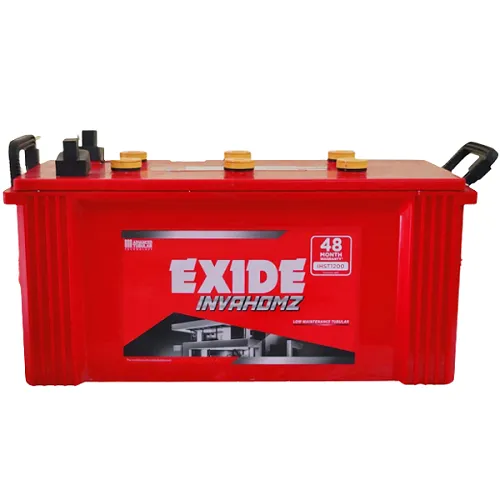
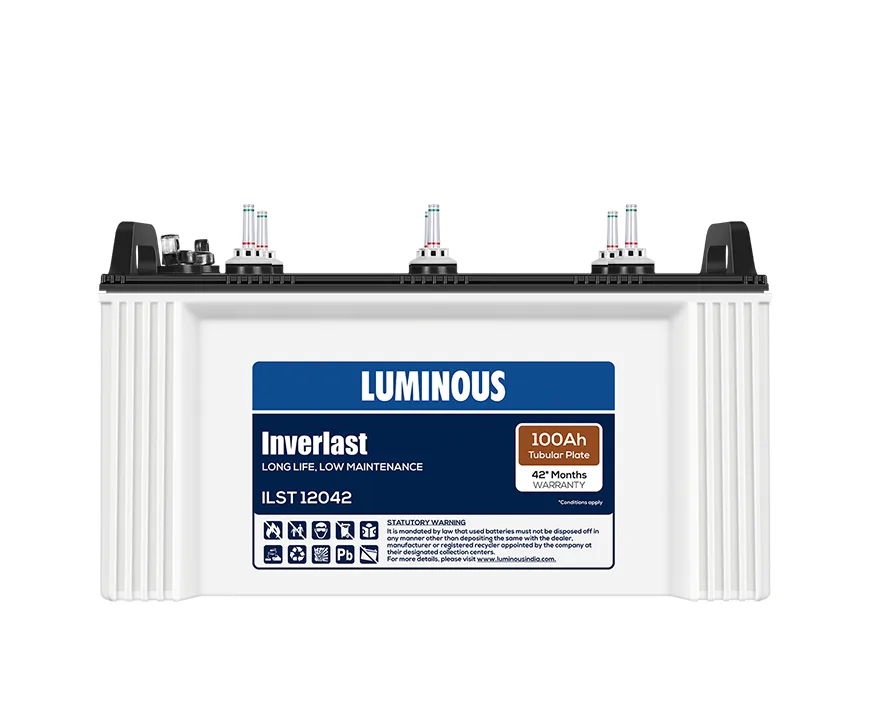
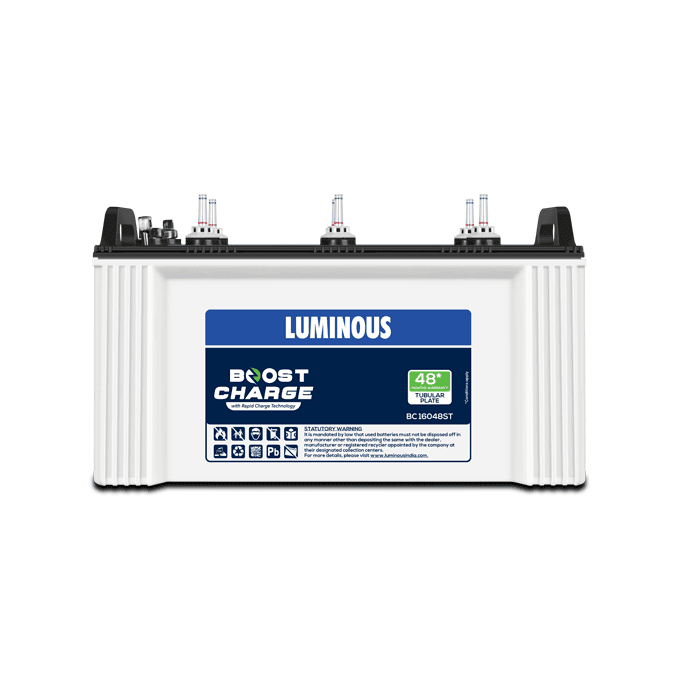
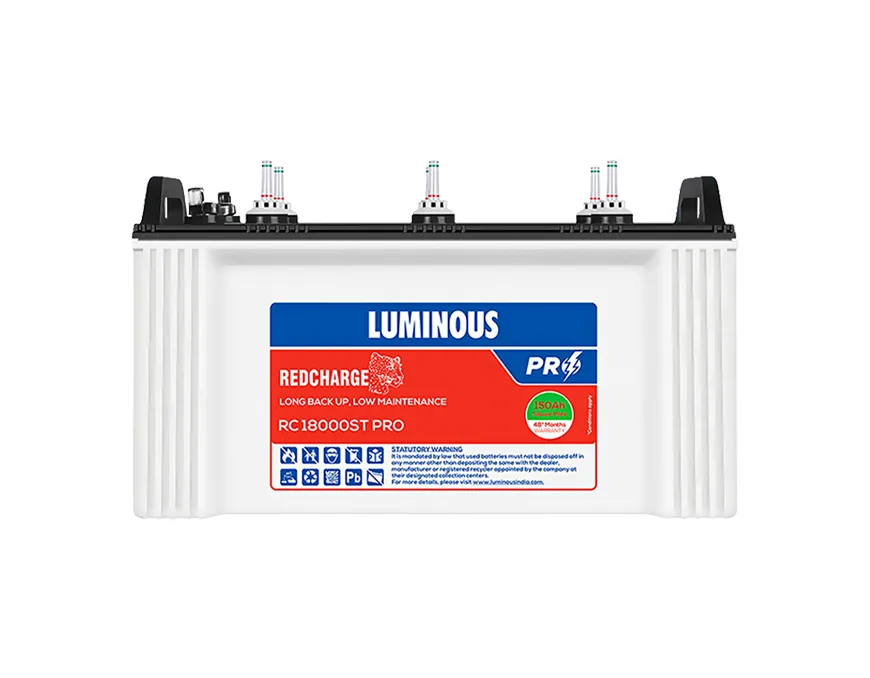
For a home, a tall tubular battery with a generous electrolyte reserve gives the most margin between top-ups, and it tolerates deep discharges better than a flat plate battery. Compare options in inverter batteries, or look at a matched inverter and battery combo if you are replacing both. If you want the battery fitted for you, see where we deliver on our locations page, and remember that trading in your old battery lowers the cost of the new one.
Heat, dust, traffic and long power cuts cannot be avoided in Delhi. What you can control is where the battery sits, how often it is charged fully, and how soon you test it. Those three habits decide whether a battery reaches the end of its warranty or fails a year short of it.